

Life Cycle Assessment and criticality assessment: why you need both to assess raw material risks
Dieuwertje Schrijvers
Imagine that you are responsible for the production of NMC811 batteries for electric vehicles. You follow the news. Geopolitical tensions are increasing, China dominates the production of many critical raw materials, and the supply of cobalt is concentrated in the Democratic Republic of the Congo. You know that your raw materials present a high risk of supply disruption. One morning, your director asks you: “Is our choice of NMC811 sustainable? In five years, will we still be able to produce this battery? Or should we switch to LFP?” You have experience in LCA. You know that the EU Product Environmental Footprint (PEF) method includes an indicator on resources. But do you really have the answer to this question?
Why your LCA does not answer your director’s question
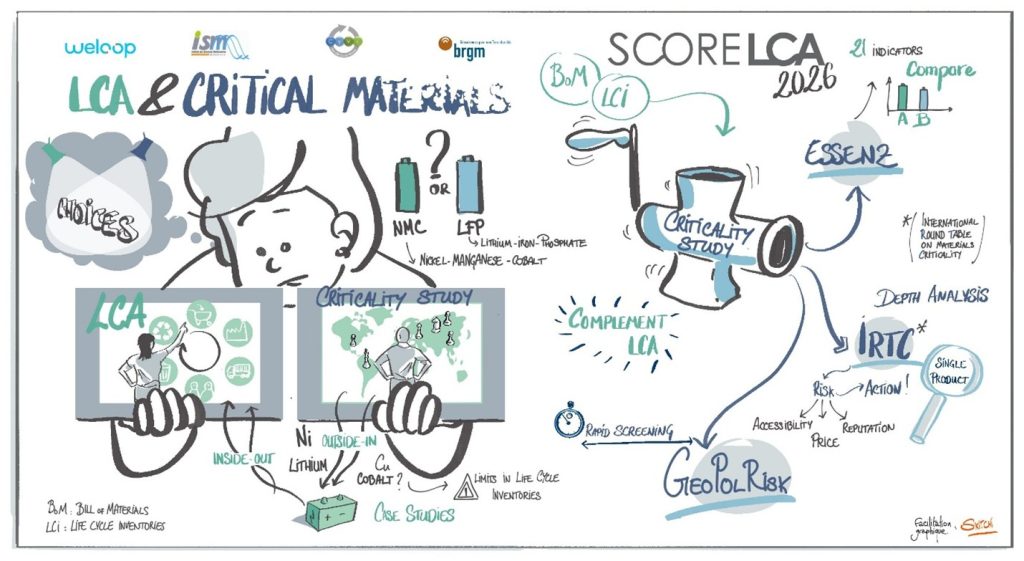
This is precisely the question we explored in the SCORE LCA project “LCA and criticality”, a collaborative project with the University of Bordeaux, BRGM and SCORE LCA. In this article, I will show you why your LCA is not sufficient, and what to do instead. To assess the risks associated with your raw materials, you need a comprehensive criticality study in addition to your LCA. Three methods are complementary to achieve this: GeoPolRisk, ESSENZ and the IRTC tool. These three methods are not used in the same way; each answers a different question. Let me explain why.
What LCA sees and what it does not see
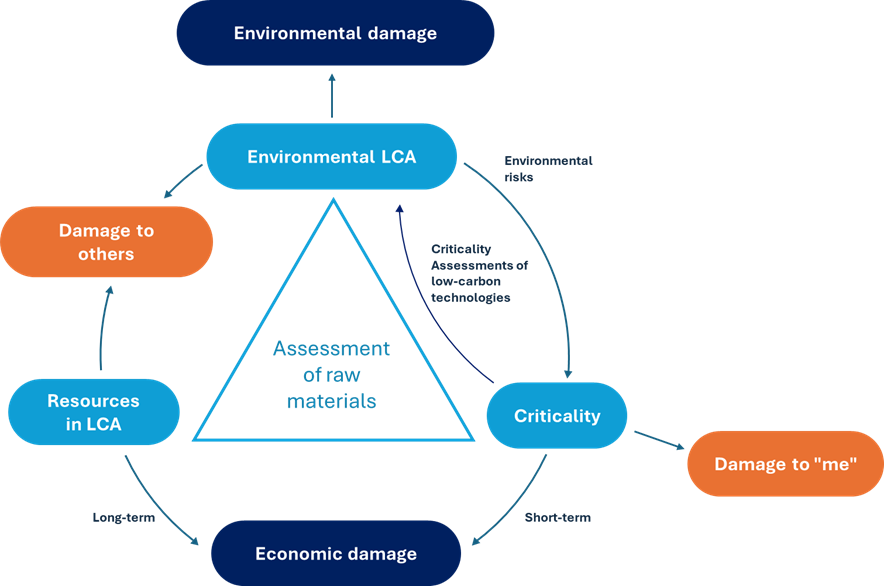
LCA assesses long-term environmental and economic damages at the global scale, for actors located outside your value chain, the ecosphere or, in the case of a resource assessment, potential future users of resources. A criticality assessment has a different scope. It assesses short-term economic damages, that is to say over the next five to ten years, for a specific actor in your value chain, you, your company, your suppliers, or even your entire economy. These two approaches do not substitute for one another. They are complementary.
Let us see what this means in practice. In an LCA of an NMC811 battery, you could conclude that “the production of an NMC811 battery reduces access to gold for potential future users”. This is ideally assessed via a resource indicator based on dissipation. This type of information is relevant for external communication, for example for consumers, investors or CSR marketing.
Conversely, a criticality study can tell you: “There is a risk of a disruption in the supply of cobalt. This could compromise the profitability of NMC811 production in the coming years.” This is relevant information for your director, but also for other stakeholders, such as your suppliers, your downstream customers, or local public decision-makers wishing to stimulate the development of low-carbon technologies.
A criticality assessment does not merely complement an LCA; an LCA can also enrich a criticality study, by indicating that a high environmental footprint of a material could reduce future demand for your product, or constrain your access to this material through regulatory requirements.
LCA and criticality studies ask two fundamentally different questions, “what is my impact related to the use of raw materials?” versus “is my supply at risk?”, and each requires its own tool. Together, they give you a complete overview.
Assessing criticality, 3 methods, 3 levels of analysis
How do you carry out this criticality study? Here is what we did in the SCORE LCA project for lithium-ion batteries.
We compared an NMC811 battery with an LFP battery. Which one is the riskiest from a raw material perspective? We applied three criticality methods, each with a different recommended use.
GeoPolRisk: a rapid screening to complement an LCA
GeoPolRisk, the first level of analysis. This method aggregates three indicators: the concentration of global supply, the political stability of supplying countries with regard to a given region, for example the EU or France, and the purchasing cost for that region.
The result shows us that if all battery components were manufactured in France, nickel, cobalt and lithium would present the highest supply disruption risks for the NMC811 battery. This is useful and fast, but it remains limited to a few indicators, and a high score may reflect a high unit price as much as a real risk of disruption. Therefore, we recommend GeoPolRisk as a first level of screening, to create an initial level of awareness, as a rapid complement to an LCA.
ESSENZ: comparing the risk profiles of two products
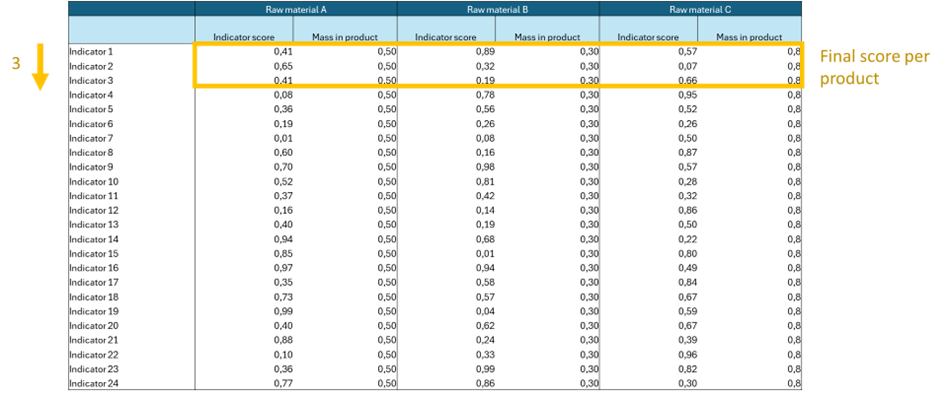
ESSENZ, the structured comparison. ESSENZ covers 21 indicators, grouped into economic, social and environmental dimensions. The scores are aggregated at indicator level. The method compares the two products indicator by indicator.
The result shows us that NMC811 batteries present higher risks than LFP batteries, particularly in terms of production concentration and political instability. This is the method we recommend when you need to choose between two products available on the market, depending on your tolerance to different types of supply risks, for example if you are an automotive manufacturer sourcing batteries. However, as it aggregates raw materials by indicator, this method is not ideal for quickly identifying specific raw materials to target for risk reduction.
IRTC: in-depth hotspot analysis for a product
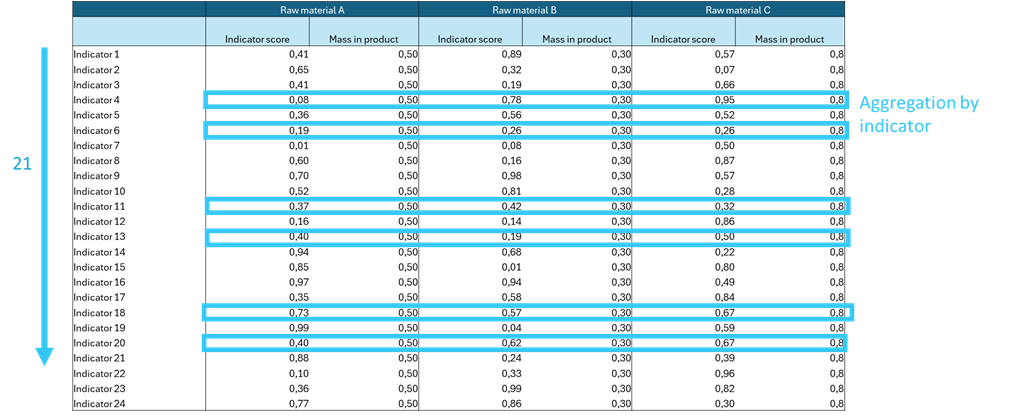
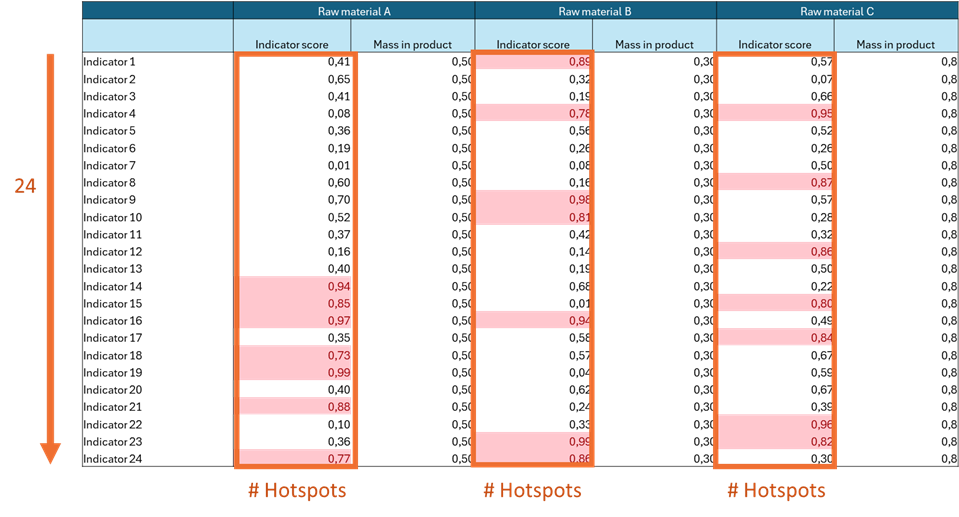
IRTC, the in-depth analysis. The IRTC tool evaluates 24 indicators per raw material and identifies hotspots, the indicators for which a resource is considered critical.
Our result shows that cobalt, tantalum and antimony present the highest number of hotspots in NMC811 batteries. These hotspots cover issues such as high supply concentration, export restrictions, by-product dependencies, or links with corruption and child labour. But what does this mean concretely for a company? The IRTC method is accompanied by a cause-and-effect framework showing how indicators are linked to business risks: accessibility, price and reputational risks. This link is directly visible in a freely accessible web tool.
From risk identification to action
A criticality study does not stop at identifying hotspots. Its final objective is to know what to do. Criticality is decision-oriented. The IRTC tool proposes, for each problematic indicator, concrete mitigation measures: substitution, stockpiling, internal recycling, supplier diversification. And each measure is associated with the value chain actor who must act: R&D, procurement, management.
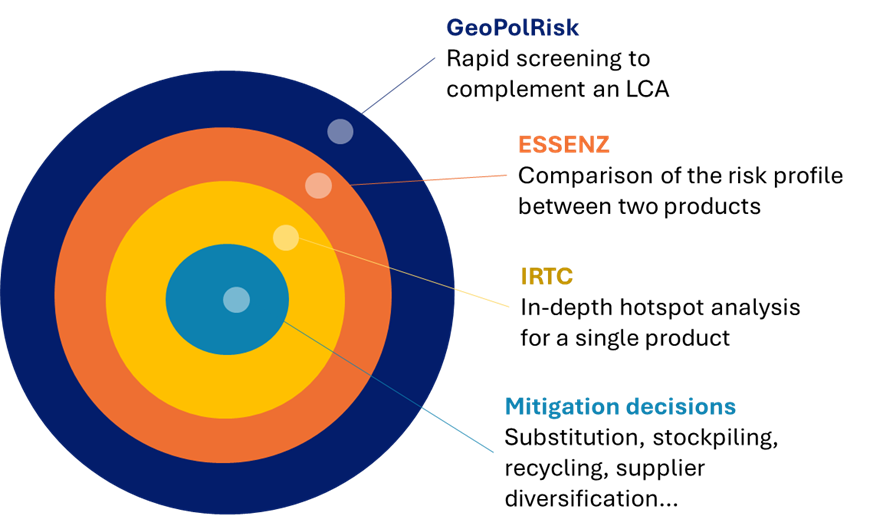
This link between the indicator, the business risk and the mitigation measure is what GeoPolRisk and ESSENZ, on their own, cannot provide. This is why we recommend combining the three methods: GeoPolRisk for screening, ESSENZ for comparison, IRTC for in-depth analysis and mitigation decisions.
The answer your director expects
Let us return to your director. They ask you: “Will we still be able to produce NMC811 in 5 years?”
With an LCA alone, you can tell them that NMC811 has a higher environmental impact than LFP, and that this may weigh on future demand. This is already useful.
But with a comprehensive criticality study—GeoPolRisk to quickly check whether the notion of criticality is relevant for your product, ESSENZ for a structured comparison between two products, and the IRTC method to identify hotspots and mitigation measures—you can answer precisely which materials are actually at risk in your specific product, why, and what to do at each level of your value chain.
At WeLOOP, we systematically integrate the GeoPolRisk method into our LCA studies, and we carry out in-depth criticality analyses using the IRTC method.
We also invite you to consult the SCORE LCA report for a detailed guide on the implementation of each method, its current limitations and recommendations for the future. The SCORE LCA report will be available on the SCORE LCA website in September 2026. Follow the SCORE LCA LinkedIn page to stay informed about its publication.
This article is based on the presentation at the SCORE LCA seminar, 19 March 2026, Paris, France, of research work carried out within the framework of the SCORE LCA “LCA and criticality” project, in collaboration with the University of Bordeaux, ISM CyVi, BRGM and SCORE LCA. Report authors: Dieuwertje Schrijvers, Emilie Guilvert, Anish Koyamparambath, Guido Sonnemann, Frédéric Lai, Naeem Adibi.