


Product carbon footprint: measure, validate and reduce your emissions through LCA
Do you need to calculate a product’s carbon footprint, respond to a customer request, compare different solutions, prepare for regulatory requirements or identify your main opportunities for emissions reduction?
A carbon footprint figure is only useful if it is based on consistent system boundaries, representative data and a methodology suited to your objectives.
At WeLOOP, we draw on our expertise in Life Cycle Assessment (LCA) to assess product carbon footprints, delivering robust, understandable and actionable results to support your decision-making.





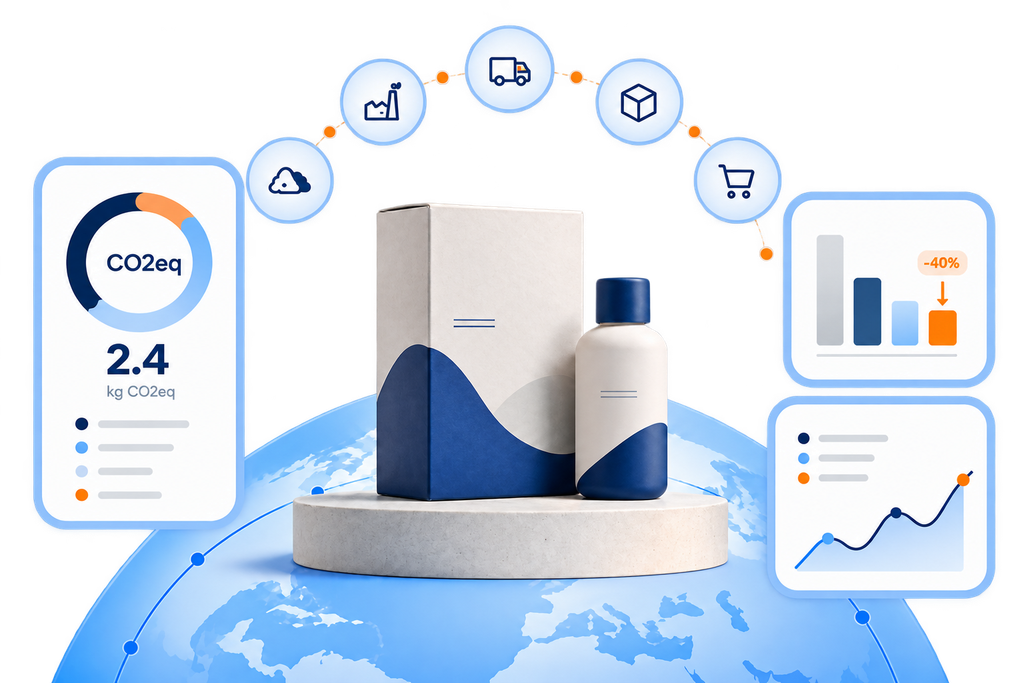
How can you use your carbon footprint to guide your decisions?
From quantifying emissions to making informed decisions. We help you understand what drives your product’s carbon footprint and identify the reduction opportunities that really matter.
01
Respond to a Customer Request
Your customers or clients require carbon footprint data for your products or value chain.
02
Anticipate Regulatory Requirements
You need to prepare for new environmental calculation, reporting or communication requirements.
03
Compare Different Solutions
You want to compare materials, suppliers, technologies, processes or end-of-life scenarios.
04
Reduce
Your Emissions
You need to identify the life cycle stages that contribute most to climate change so you can prioritise your actions.
Why is product carbon footprint assessment based on LCA?
A product’s carbon footprint is one of the indicators derived from Life Cycle Assessment (LCA), a methodology that evaluates its environmental impacts throughout its entire life cycle.
Why choose WeLOOP for your carbon footprint assessment?
We support you in calculating your carbon footprint, drawing on our expertise in Life Cycle Assessment (LCA). Our approach combines scientific rigour, an understanding of your industrial challenges and actionable results to drive meaningful change.
01
Expertise Grounded in LCA
An LCA-based approach to assessing greenhouse gas emissions across the entire life cycle of your products and services.
02
Results to Help Reduce Your Emissions
Identifying the main sources of emissions and assessing improvement scenarios to help you prioritise your emissions reduction actions.
03
Support Tailored to Your Objectives
A study tailored to your sector, available data and specific needs: eco-design, comparison of solutions or environmental communication.

A product’s carbon footprint is one of the indicators derived from Life Cycle Assessment (LCA), a methodology that evaluates its environmental impacts throughout its entire life cycle.
Bilan carbone, carbon footprint, LCA: how do they differ?
These terms are often used interchangeably, even though they do not always refer to the same scope or serve the same purpose. We have prepared an article to clarify the differences and explain the main standards and frameworks associated with each.
What requirements must your carbon footprint
Meet?
Carbon footprint assessments are based on general standards and frameworks, but some sectors also have their own specific requirements.
General Standards and Frameworks
Votre secteur impose-t-il ses propres règles ?
How does WeLOOP calculate your product’s carbon footprint?
Define the Objective
Clarify the purpose and intended use.
Define the Scope
Establish the study framework.
Collect Data
Gather the necessary information.
Model the Life Cycle
Build the Product LCA Model.
Calculate the Carbon Impact
Quantify emissions in kg CO₂eq.
Interpret the Results
Understand the main contributors.
Use the Results
Compare, Reduce and Decide.
Carbon results that inform your decisions

DECIDE
Compare
A material, supplier, process or scenario.
ACT
Reduce
Identify key emission sources and quantify the potential impact of the proposed

ANTICIPATE
Eco-design
Use the results from the design stage to guide decision-making.

HIGHLIGHT
Communicate
Provide clear, documented data tailored to customer requirements, tender submissions or environmental communications.
What if carbon didn't tell the whole story?
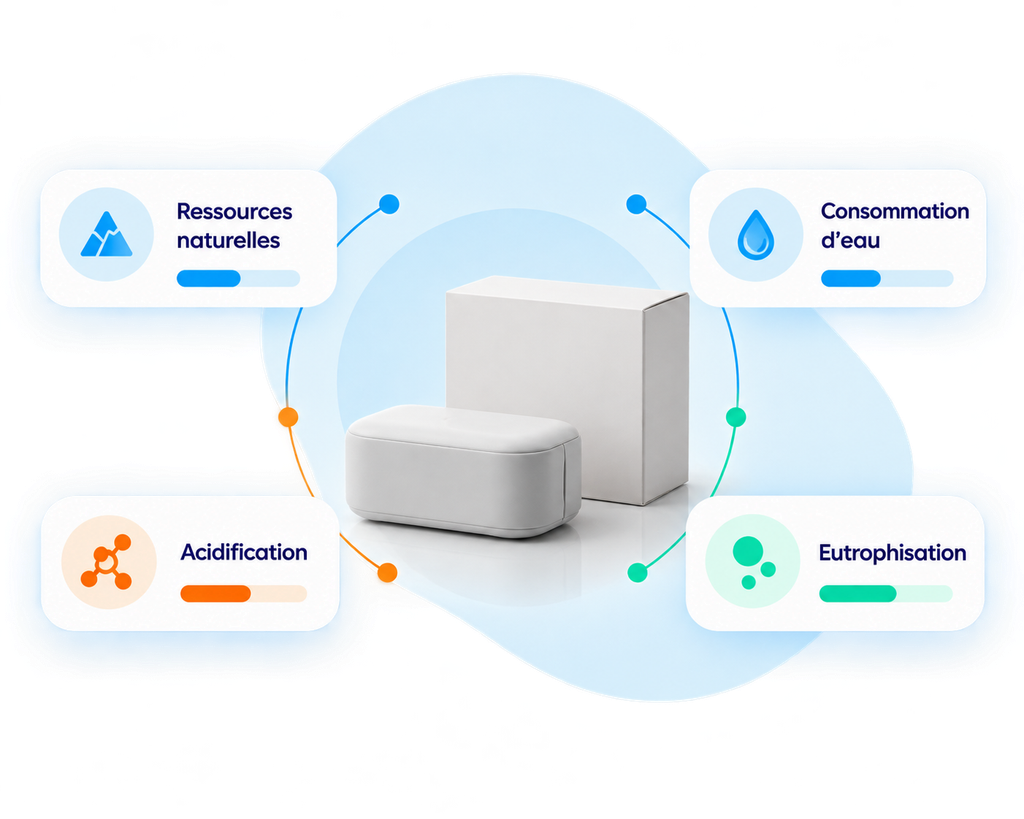
Reducing a product’s carbon footprint is essential. However, improvements in climate impact can sometimes lead to an increase in other environmental impacts.
Multi-criteria LCA enables the assessment of a wide range of environmental impacts (resource use, water use, acidification, eutrophication, etc.) and helps ensure that decisions do not simply shift impacts from one category to another.
Essential questions about product carbon footprints
Our product carbon footprint and LCA experts
 Naeem Adibi
 Dr. Carolina Szablewski
 Noura Rhabani
 Dr. Dieuwertje Schrijvers
 Dr. Anish Koyamparambath
 Perrine Sébastien
 Clément Bolle
 Emilie Guilvert
 Sam Herlicq